Best online casino ireland real money: what to check before the first deposit
 Best casinos available in IrelandUpdated 7 November 2026



Anyone comparing the best online casino ireland real money options is really comparing four things: who regulates the account, which EUR payment routes work in both directions, what the offer terms tie up, and what the game information panel actually tells you. Brand rankings rarely separate those, so this page works through them in order for an Irish account and ends with the route from registration to a first payout.
What changes the moment the balance is real
Demo play and real-money play use the same game engine but a different set of rules around it. Three things switch on at once, and each one creates a question that demo mode never raises.
- An account with an identity attached. Registration details have to match your documents, because the same details are checked before a payout.
- A payment route in your own name. Coral's deposit guidance asks customers to use a method that belongs to them and is registered in their name. The withdrawal side inherits that requirement.
- Terms that bind. Offer conditions, stake caps and maximum winnings terms have no effect in demo mode and full effect on a real balance.
Demo mode remains useful for one specific job: settling the stake range and the pace of a title before any money is committed. What it does not show is how the cashier behaves, how long a payout takes or how an offer's playthrough feels against a real balance, and those are exactly the parts that decide whether a site suits you. The game-side background is in the online casino guide.
The practical order follows from that. Settle the account and payment questions first, then the offer terms, then the games. Reversing the order is how a balance ends up sitting behind a condition nobody read.

Who oversees an Irish real-money account
Gambling in Ireland is regulated under the Gambling Regulation Act 2024, which established the Gambling Regulatory Authority of Ireland as the licensing and oversight body for the sector, including online gambling. Licensing moved to that authority from the previous arrangement, under which remote operators held permits issued through the Revenue Commissioners.
For a reader, the relevant point is procedural rather than legal. The licence an operator holds determines where a complaint goes if the account, a payout or an offer is disputed, and which rules the operator has to follow on advertising, account controls and customer funds. Before depositing, look for the licensing statement in the site footer and the published complaints route. Do not copy a licence number from marketing material; if the information is not stated anywhere, that absence is itself a finding.
Two account-level details follow from an Irish licence. The account should be held in EUR, so that deposits and payouts avoid a conversion step that changes the amount credited, and access is restricted to adults aged 18 or over. Both are straightforward to confirm on the registration screen described in the registration guide.
Site terms are the other document worth opening once. They set out the maximum winnings terms, the account closure rules and the conditions under which checks can be repeated, none of which appear in a comparison table. The relevant wording is in the terms and conditions.
Best online casino ireland real money: six checks that separate sites
Most rankings differ only in the order of the same brands. These six questions produce different answers for different sites, which makes them worth asking in person rather than reading about.
- Does the cashier show both directions for your method? A route that deposits but cannot pay out means a second route, and a second check, later on.
- Are the game information panels complete? Stake range, rules and the return figure should be reachable from inside the game, not from a separate marketing page.
- Are the offer terms readable before opting in? The qualifying deposit, the playthrough, the stake cap and the excluded methods should all be findable in one document.
- Does support answer with a reference? A reply that cites the terms is worth more than a reply that reassures you, because the first one will still be useful during a dispute.
- Are the account controls easy to reach? Limits and account tools that take several menus to find tell you how the site is built.
- Is the payout information split by method? A single brand-level payout figure is describing none of the routes it covers.
Four of these six can be answered before any money moves, by opening the cashier and one game. That is a better use of ten minutes than reading three ranking pages, because the answers apply to your account rather than to an average one.
Game categories and what each asks of a real balance
The lobby splits into categories that behave very differently on the same deposit. The table sets out what each one needs and what it tells you.
| Category | What it asks of the balance | What to read first |
|---|---|---|
| Slots | A stake per spin you set yourself, so the balance stretches as far as the stake allows | The bet range and paytable in the game information panel |
| Roulette and table games | A stake per round within the table's own limits, which are set per table | The table limit display and the bet types available |
| Live dealer tables | A seat at the table minimum, usually higher per round than a slot spin | The table minimum and maximum before you sit down |
| Game shows | A stake per round plus a round length set by the host, not by you | The round structure and which side bets are optional |
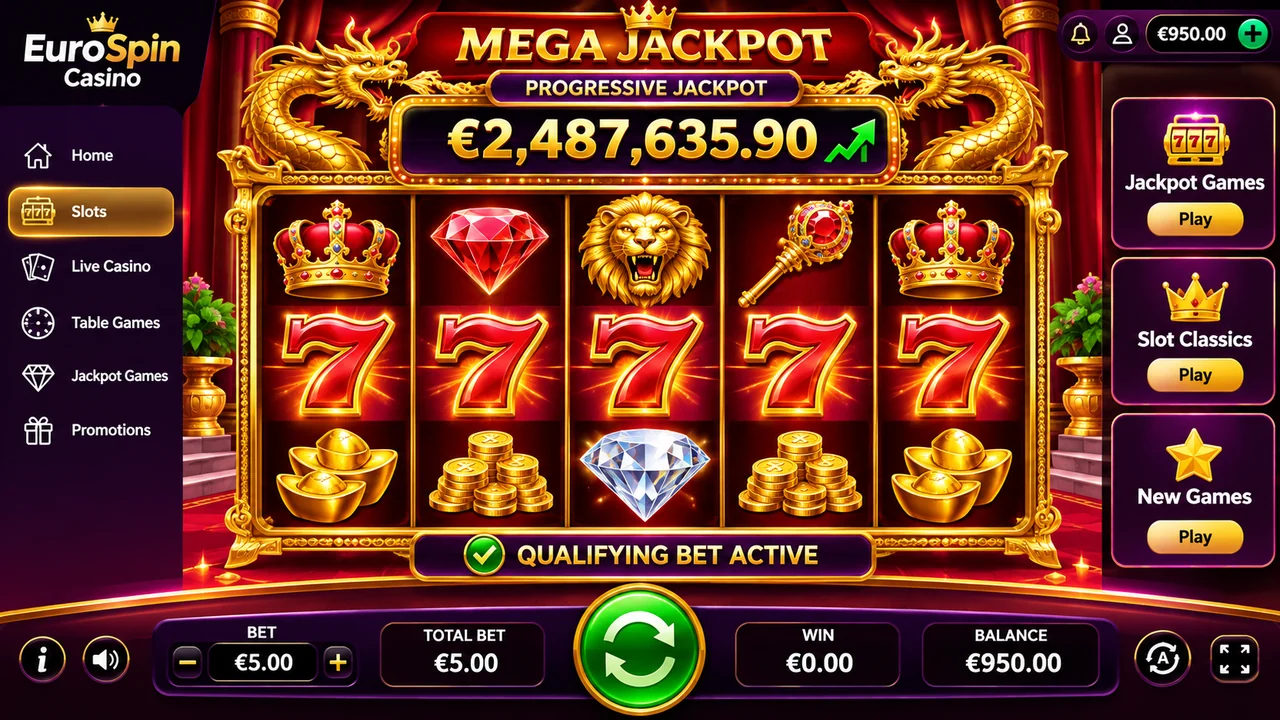
| Jackpot games | A qualifying stake in some titles, since the top prize can require a minimum bet | Whether the jackpot requires a qualifying stake at all |
The jackpot row is the one that catches people. A title can be playable at a low stake while its headline prize is only reachable at a higher one, which makes the advertised figure irrelevant at the stake actually being played. The information panel states this, and it is the only place that does. Category guides sit in the slots section, the live casino section, table games and jackpot games.

EUR payments in both directions
Payment routes are where an Irish real-money account differs most from a general international one, and the detail that matters is set at account level rather than brand level.
One documented Irish restriction is worth knowing in advance: Coral Help states that credit card deposits are not accepted for customers in Ireland. A public payment list that names a card brand is therefore not confirmation that every product from that brand will work; the debit option shown in your own signed-in cashier is what decides. Mastercard appears among the publicly listed casino payment options, with the available card type shown in the cashier.
| Route | Confirm before you use it | Where the figure appears |
|---|---|---|
| Visa debit | That the debit option appears for your account and the displayed minimum | Under the selected method in the cashier |
| Mastercard debit | That a debit rather than credit product is offered, since credit cards are not accepted in Ireland | Cashier, beside the card option |
| PayPal | That the wallet is in your own name and the approval step completes | Wallet prompt plus the cashier summary |
| Paysafecard | That the prepaid route suits you, since a prepaid code is not a general payout route | Provider screen and the cashier |
| Apple Pay | Which card sits behind the wallet, because the payout side usually follows that card | Device wallet and the cashier |
The timeframe displayed under a method covers that method's own transfer. The operator's processing of a withdrawal request is a separate figure, and the total wait is both added together, with bank holidays extending any bank leg. Route detail is in the payment methods hub, the deposit steps in the deposits guide, the payout steps in the withdrawals guide, and a request that has not moved in the withdrawal pending guide.
Offer terms decide whether the balance is yours
An offer attached to a real-money balance changes what you can do with that balance until the condition clears. Four terms carry nearly all the consequences, and none of them are the headline number.
- Qualifying deposit. The minimum that attaches the offer, which can sit above the cashier's own minimum.
- Playthrough. The total turnover required, and whether it is calculated on the bonus, the winnings or both.
- Maximum stake while a bonus is active. The rule most often breached by accident, and a breach usually voids the bonus balance rather than one round.
- Game weighting and exclusions. Table games and live tables frequently count at a reduced rate or not at all, so progress is slower than the balance suggests.
Payment method exclusions sit underneath these and are easy to miss. An offer can exclude particular routes from qualifying, which means a deposit can meet the amount and still fail on method. The current conditions are set out in the bonus terms guide, with the live list in offers and the welcome offer.
If the priority for a session is keeping the balance withdrawable, the clean answer is not to opt in. That is a legitimate choice rather than a missed opportunity, and it removes the stake cap and the playthrough from the session entirely.
What RTP and volatility do and do not tell you
Return to player describes long-run behaviour over an enormous number of rounds. It is a comparison tool between titles, not a forecast for a session, and it does not become more predictive on a larger balance. Two titles with the same figure can feel completely different to play.
Volatility is the figure that describes that difference. A high-volatility title concentrates its returns into infrequent, larger outcomes, which on a modest balance usually means the session ends before the distribution shows itself. A lower-volatility title produces smaller, more frequent returns from the same deposit. Neither is better; they suit different balances and different session lengths.
Both figures belong to the version of the game you actually open, because the same title can ship in more than one configuration. Read them in the information panel of the version in your own lobby rather than from a third-party list. Side-by-side figures are collected in the RTP and volatility comparison tool, and the mechanics in the slots guide.
What neither figure supports is a betting system. No stake pattern changes the odds built into a game, and no sequence of results makes the next round more or less likely. Treat anything presented as a method for beating a casino game as a reason to stop reading that source.
Phone play and the parts that behave differently
Most real-money sessions in Ireland happen on a phone, and a few things genuinely change on the smaller screen rather than merely looking different.
Game information is the main one. The panel holding the stake range, the paytable and the return figure is often behind a menu icon rather than visible beside the reels, which is why it goes unread on mobile more often than on a desktop. Find it once on each title you intend to play, because it is the only place those figures are stated for the version you have open.
Interruptions are the second. A call, a lost connection or a backgrounded app can end a round differently from the way you expect, and the recorded outcome is the one held by the operator rather than the one last shown on the screen. After any interruption, check the transaction or game history before assuming a round did not count.
Payment approval is the third. Wallet routes hand off to a device prompt and return to the cashier, and the deposit is confirmed by the cashier record rather than by the wallet's own message. Wait for the record to appear before starting a second attempt. The app-side detail is in the app guide.
Mistakes on a first real-money account
The same handful of problems account for most first-month frustration, and all of them are avoidable before the first deposit.
- Leaving verification until a payout is wanted. The check then sits between you and the money instead of running in the background.
- Depositing on a route that cannot pay out. The closed-loop rule means the balance has to leave by a method that has been registered and checked.
- Opting into an offer without reading the stake cap. A single larger bet can void a bonus balance and everything won from it.
- Reading a brand-level payout figure as a personal estimate. Speed is a property of the route and the account state, not of the brand.
- Assuming a listed method is available. A public payment list describes the usual case; the signed-in cashier describes your account.
- Judging a game by its headline jackpot. Where a qualifying stake applies, the advertised prize is not in play at a lower bet.
Account-side questions outside the cashier are grouped in the account help guide, with short answers in the FAQ.
From registration to a first payout
Six steps in order. Done this way, the only wait at the end is payment processing.
- Register with details that match your documents and set the account currency to EUR.
- Complete verification immediately, before any balance exists to argue about.
- Open the cashier and pick a method that appears on both the deposit and the withdrawal list; note both minimums.
- Decide on the offer question before depositing, since opting in afterwards is usually not possible.
- Open the game you intend to play and read its stake range and information panel against your balance.
- When withdrawing, use the original method, read the processing and transfer figures separately, and track the status rather than resubmitting.
Gambling is for over-18s and remains entertainment with a cost rather than a way to make money; the available limits and tools are described in the responsible play guide.
Real-money account questions for Ireland
Who regulates online casino accounts for Irish players?
The Gambling Regulation Act 2024 established the Gambling Regulatory Authority of Ireland as the licensing and oversight body for the sector, including online gambling. The licence an operator holds determines the rules it follows and where a dispute about your account is directed.
Can I deposit with a credit card in Ireland?
Coral Help states that credit card deposits are not accepted for customers in Ireland. Look for the debit option in your signed-in cashier instead, and treat a public list that names a card brand as describing the brand rather than every card product.
Does a bigger welcome offer mean a better site?
Not on its own. The qualifying deposit, the playthrough, the maximum stake while a bonus is active and the game weighting decide what the offer is worth, and those four terms vary far more between sites than the headline figure does.
Why does the cashier show different methods than the public payment page?
A public list describes the methods the operator offers generally. Availability for your own account depends on the country, currency and the provider, so the signed-in cashier is the place that shows what you can actually use and the minimum attached to it.
How long does a first withdrawal take?
Two figures add together: the operator's processing of the request and the chosen method's own transfer time. Verification being complete is usually the difference between the published figure and a longer wait, and any bank leg moves on working days only.
Is the advertised jackpot available at any stake?
Not always. Some jackpot titles require a qualifying bet before the top prize is in play, which means the advertised figure is not reachable at a lower stake. The game information panel states whether a qualifying stake applies.